
Last Updated: November 5, 2026
Quick Summary
Artisan made means a skilled craftsperson designs, controls and finishes the entire piece in small batches, while handmade simply means the item was formed by hand, which can include kits, hobby work or partly mechanised processes. Both differ from handcrafted, a looser marketing term, and from mass-produced goods.
- Genuine handmade pieces show slight differences in shape, weight and decoration where a machine would be perfect.
- Identical twins usually mean moulds, so compare two of the same item before buying.
- Ask sellers where the workshop is and who decorates the pieces to confirm provenance.
- Artisan prices fund labour, not just product, so expect to pay more than at a homeware store.
- Sellers often use handcrafted for pieces that are largely machine-formed and hand-finished.
Table of Contents
- Artisan Made vs Handmade: What's the Difference?
- How to Identify Handmade Products Without Guesswork
- Ethically Made Home Decor: Buying Pieces That Last
- Frequently Asked Questions
Artisan Made vs Handmade: What's the Difference?
Artisan made and handmade are often used interchangeably, but they describe different levels of human involvement. Handmade means the item is made by hand rather than by automated machinery; artisan made goes further, with a skilled craftsperson designing and controlling the entire piece, start to finish.
The artisan made vs handmade products question matters because it shapes what you pay for, how long a piece lasts, and whether the maker earned a fair return. research on handmade consumption and authenticity suggests buyers link authenticity to artisanal goods, which is why the words get stretched.
| Term | Who makes it | Human involvement | Typical variation |
|---|---|---|---|
| Handmade | A person, possibly with some machine help | High | Noticeable |
| Artisan made | A trained craftsperson, full control | Very high | Expected and intentional |
| Handcrafted | Blended; often workshop production | Moderate to high | Some |
Artisan made means a skilled maker controls the design, materials and finishing of a piece, usually in small batches. Handmade means the item was formed by hand, which can include kits, hobby work or partly mechanised processes. Both differ from handcrafted, a looser marketing term, and from mass-produced goods. Sellers often use "handcrafted" for pieces that are largely machine-formed and hand-finished, so ask what the maker actually did.
How to Identify Handmade Products Without Guesswork
Look for irregularity where a machine would be perfect: genuine handmade pieces show slight differences in shape, weight and decoration. Turn the piece over to check for tool marks, uneven glaze pooling or a slightly off-centre base, compare two of the same item (identical twins usually mean moulds), and ask about provenance.
Our hand-decorated Sicilian ceramic bowl centerpiece from Caltagirone is handcrafted and decorated using traditional techniques. A hand-painted Caltagirone ceramic pine cone is also handcrafted and hand-decorated, with a Made in Italy certificate.


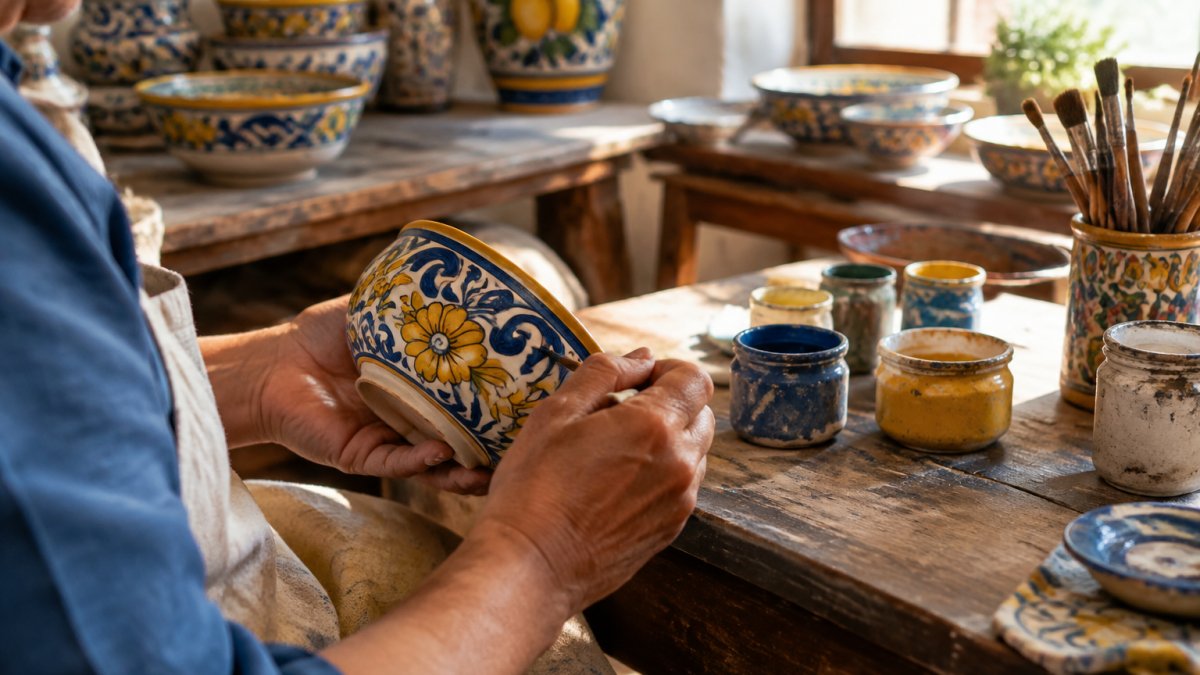
The research on sustainable business in artisan craft industries points to small workshops and local materials as defining features of genuine craft production. Ask sellers where the workshop is and who decorates the pieces.
Sicilian Caltagirone ceramic cart, handmade and hand-decorated, orange →
Ethically Made Home Decor: Buying Pieces That Last
Artisan work is valued for its craftsmanship: each piece is handmade and decorated by hand, and the price reflects that labour.
That is the honest answer to "why is it pricier than a homeware store": you are funding labour, not just product. Our Classic Moor Head with Crown and the Testa di Moro Caltagirone ceramic head are both handcrafted in Caltagirone.

Check the product listing before buying for serving or everyday use. guidance on fair trade and ethical sourcing standards is a useful starting point if you want to verify a seller's claims about maker pay and supply chains.
The Verdict
Choose artisan made when you want a piece with visible craft and a considered, handmade finish; handmade pieces suit decorative use when provenance matters less. Browse our Sicilian ceramics and bring a piece of Caltagirone craftsmanship to your table.
Frequently Asked Questions
What is the difference between artisan-made and handmade products?
Handmade means a person made the item rather than a machine. Artisan-made goes further: a skilled craftsperson designed and produced it using traditional techniques, and their name or workshop is usually traceable. A handmade candle poured in a home kitchen is handmade but not necessarily artisan-made. A Caltagirone ceramic bowl, handcrafted and decorated by hand, is both. The distinction matters because artisan-made pieces carry training, heritage and a reputation the maker has to protect.
How can you tell if a product is genuinely handmade?
Look for small variations between units, because identical copies suggest a mould or machine. Ask where the piece was made and by whom, and check whether the seller names the workshop. On ceramics, look at the base for brush marks and uneven glaze pooling. A certificate such as Made in Italy, or a documented supply chain, adds weight. Price is a clue too: hand-painted decoration takes hours, so a suspiciously cheap 'handmade' piece in a mass-market range usually is not one.
Why do artisan-made products often cost more than mass-produced ones?
A single artisan can only finish a limited number of pieces each week, so labour is the largest cost. Hand-painting, glazing and firing a Caltagirone ceramic bowl takes hours that a factory line completes in minutes. The maker is paid for that skill, and the price also covers quality materials and the losses from firing. Mass-produced goods spread the same cost across thousands of units. Paying more buys individual variation, a traceable maker and a piece you can keep for years rather than replace.
