
Last Updated: November 19, 2026
Quick Summary
To choose the best eco friendly tea towels, start with the fibre: organic cotton is absorbent with a soft hand, while linen is stronger when wet and dries fast. Look for waffle or open weaves that trap moisture, and skip water-repellent finishes and over-tight weaving.
- Serious Eats tested 21 kitchen towels and settled on cotton for dish work.
- Organic cotton is grown without synthetic pesticides under certification rules.
- Linen starts crisp and softens over months of washing.
- Cotton dish towels are more prone to mildew than some alternatives, so airflow matters.
- Skip fabric softener because it coats fibres and kills absorbency.
Table of Contents
- Start With Fibre: Organic Cotton Tea Towels vs Linen Tea Towels
- What Makes Absorbent Tea Towels (and What Doesn't)
- How to Care for Tea Towels So They Last
- Frequently Asked Questions
Start With Fibre: Organic Cotton Tea Towels vs Linen Tea Towels
Fibre decides almost everything about eco friendly tea towels: absorbency, drying time, hand feel, and lifespan. Serious Eats tested 21 kitchen towels across a range of fabrics and settled on cotton for dish work, citing absorbency, low cost and flexibility.
Organic cotton tea towels use cotton grown without synthetic pesticides under certification rules, balancing absorbency with a soft hand. Linen, woven from flax, is stronger when wet and dries fast, though it starts crisp and softens over months of washing. Hemp sits closest to linen in durability. One caveat: Wirecutter notes that cotton dish towels are more prone to mildew than some alternatives, so airflow matters as much as fibre.
For a certified organic cotton option, see our organic cotton waffle tea towel. If linen is where you are leaning, this French linen tea towel in blush gingham shows how the weave performs.

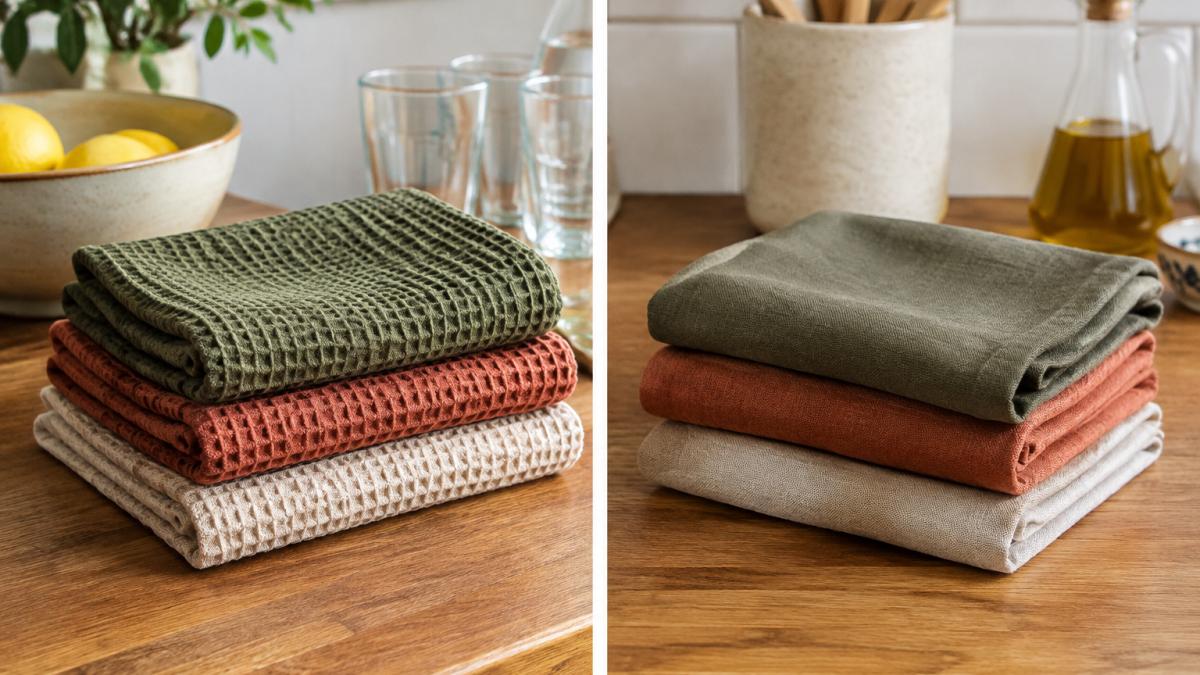
Fibre decides almost everything about eco friendly tea towels, so here is how the main options compare.
| Fibre | Key strength | Note |
|---|---|---|
| Organic cotton | Absorbent with a soft hand | Grown without synthetic pesticides under certification rules |
| Linen | Stronger when wet and dries fast | Starts crisp and softens over months of washing |
| Hemp | Closest to linen in durability | , |
| Cotton dish towels | Absorbent and low cost | More prone to mildew than some alternatives |
What Makes Absorbent Tea Towels (and What Doesn't)
Absorbency comes from the fibre's ability to take up water and the structure giving water somewhere to go. Waffle weaves and open textures trap moisture and expose more surface area, drying a bench faster than a tight weave.
What does not help: a water-repellent finish, over-tight weaving, and a towel that never fully dries between uses.
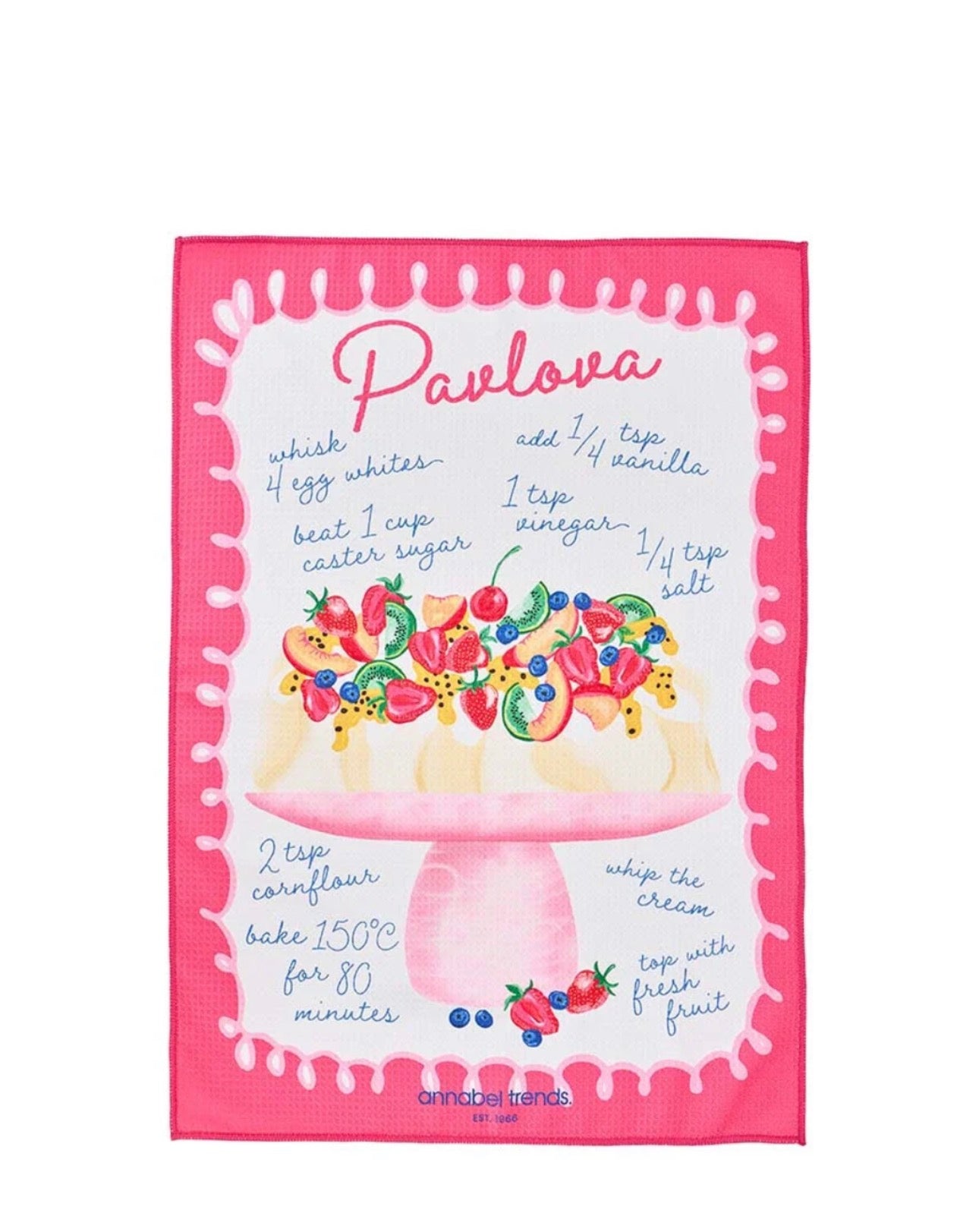
For a waffle-textured option built for drying dishes and glassware, our microfibre waffle tea towel puts that texture to work.
How to Care for Tea Towels So They Last
Care often matters as much as the weave. Wash at a moderate temperature with gentle detergent, skip fabric softener because it coats fibres and kills absorbency, and dry thoroughly between uses. Rotate two or three towels so each fully dries.
Watch out: folding a damp towel back into the drawer is the fastest route to mildew, and that smell does not wash out easily.
If you are weighing long-term value against eco claims, our buyer's guide to comparing eco friendly home goods goes deeper on what to check before you buy.
Frequently Asked Questions
What is the most eco-friendly material for tea towels?
There is no single winner, but natural fibres with verified certification come out ahead. GOTS-certified organic cotton and OEKO-TEX certified French flax linen both avoid harsh chemical finishes . Linen dries dishes and glassware without lint or streaks. Microfibre made from recycled plastic bottles is another option, though laundering it sheds fibres into waterways.
Are linen tea towels more absorbent than cotton?
They behave differently rather than one simply beating the other. Linen tea towels dry dishes, glassware and cutlery without leaving lint or streaks, which makes them strong for polishing. Cotton, especially a waffle weave, holds more water for spills and wet hands. Cotton dish towels can be more prone to mildew, so linen may suit humid kitchens where towels sit damp. Many households keep both: linen for glassware, cotton for heavy mopping.
How can you tell whether a tea towel is sustainably made?
Look for certifications on the listing, not adjectives in the copy. GOTS covers the full organic textile chain from fibre to finished cloth, while OEKO-TEX tests the finished fabric for harmful substances. Constance & Belle's organic cotton waffle towels carry both, and its French linen tea towels are OEKO-TEX certified. An eco-friendly label alone does not prove performance, so check the fibre, the certification body and the stated dimensions before buying.
