

Last Updated: November 14, 2026
Quick Summary
Style a timeless bedside lamp by placing it first, then building outward in three layers: the lamp, books or a shallow tray, and one living element, leaving half the surface clear. Keep the shade top roughly 60 to 70 centimetres above the mattress top for comfortable reading light.
- Measure the bedside table before buying any lamp or accessory.
- Keep the tallest accessory no higher than the lampshade's midpoint.
- Choose a battery-operated lamp when no power point sits nearby.
- On narrow tables, pick a slim base no wider than about 12 centimetres.
- Keep shade tops level on a shared bed for a coordinated pair.
Table of Contents
- Why a Timeless Bedside Lamp Starts With Proportion, Not Trends
- How to Style a Bedside Table Around the Lamp
- Bedside Lamp Height: The Measurements That Decide It
- Bedside Lamp Placement: Cords, Switches and Glare
- Bedside Table Lamp Ideas for Every Bed and Room
- Choosing Your Bedside Lamp From the Collection
- Frequently Asked Questions
Why a Timeless Bedside Lamp Starts With Proportion, Not Trends
A timeless bedside lamp is one whose size, shape and finish still look right in ten years, not one that follows this season's look. A common mistake is to buy the lamp first and the table second. The result is a lamp that swallows the table or disappears beside it.
Proportion decides everything. Trends fade fast; a well-scaled lamp keeps working.
Designers generally agree that a bedside lamp should sit roughly 60 to 70 centimetres above the mattress top for comfortable reading light. That single measurement settles more arguments than any style guide.
Below, we'll show you exactly how to choose a lamp that earns its place, plus the measurements and placement rules most styling guides skip.
How to Style a Bedside Table Around the Lamp
Styling a bedside table means treating the lamp as the anchor and building outward in three layers, keeping the surface at least half clear. The lamp goes first, books and a tray second, one living element last. Most people do it the other way and end up with clutter fighting the light.
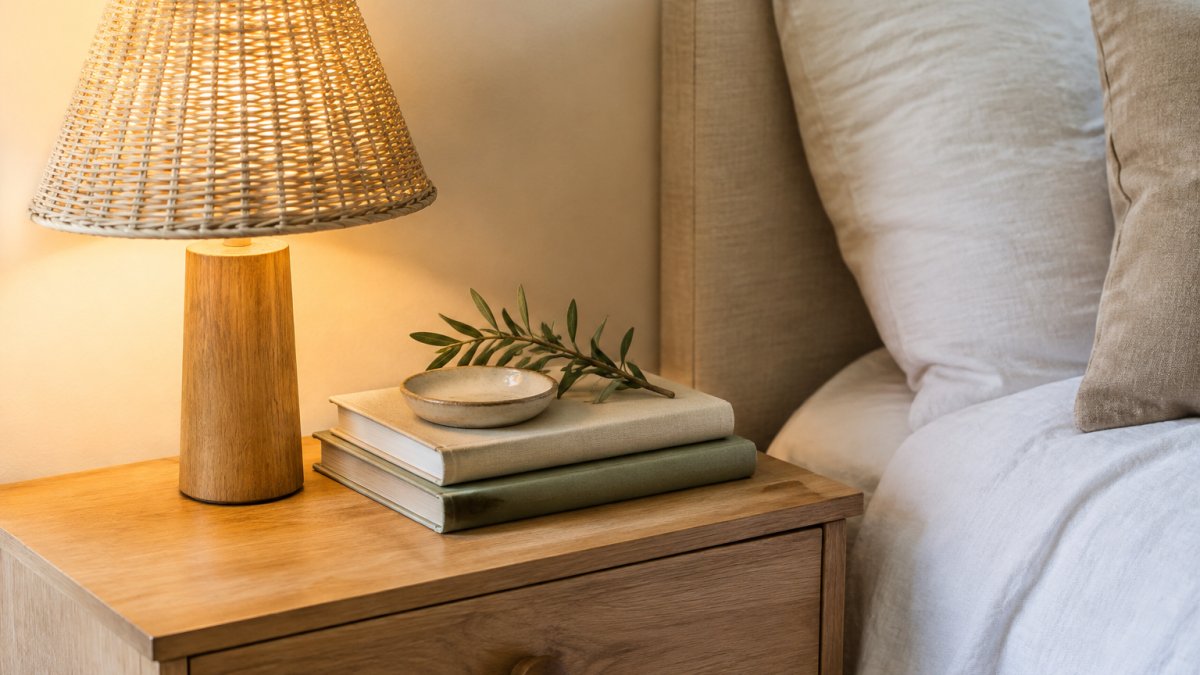
The Three-Layer Method: Lamp, Books, One Living Thing
Work through the layers in order and stop when the surface is half full. The sequence matters more than the objects.
Step 1, Place the lamp first. Set the lamp on the table and check two things before anything else goes down: the top of the shade should sit roughly 60 to 70 centimetres above the mattress top, and the base should leave at least 10 centimetres of table edge visible on the side facing the bed. If either fails, adjust the lamp or the table before styling around it.
Step 2, Add a horizontal layer for scale. A short stack of two or three hardback books laid flat, or a shallow tray roughly 20 to 25 centimetres across, gives the eye a low horizontal line that balances the lamp's vertical. Keep the stack lower than the bottom of the lampshade; a stack that reaches the shade makes the arrangement look top-heavy. A tray is the better choice on a narrow table because it corrals small items without adding height.
Step 3, Add one living element. A single small plant, one stem in a narrow vase, or a candle you actually burn.
Step 4, Leave half the surface clear. Measure it: if the lamp base, books and plant together cover more than half the tabletop, remove something.
- Layer 1: the lamp, centred or offset by a third
- Layer 2: books or a shallow tray for scale
- Layer 3: one plant, stem or candle for life
Sizing the Objects to the Lamp
Proportion between the objects matters as much as proportion between the lamp and the table. As a working rule, the tallest accessory (usually the plant or vase) should reach no higher than the midpoint of the lampshade, and the books or tray should span no more than about two-thirds of the lamp base width.
Two materials is usually enough; three starts to look busy at bedside scale.
Bedside Lamp Height: The Measurements That Decide It
Bedside lamp height is measured from the tabletop to the top of the shade, and the ideal figure sits between 60 and 70 centimetres above the mattress. Too low and you hunch to read; too high and the shade glares in your eyes.
Here is a sizing guide for choosing a bedside lamp:
| Bedside Table Height | Lamp Height (tabletop to shade top) | Result |
|---|---|---|
| 50-55 cm | 55-65 cm | Balanced for low beds |
| 55-60 cm | 60-70 cm | The safest all-round choice |
| 60-65 cm | 65-75 cm | Suits taller beds and frames |
The shade should also sit at roughly eye level when you are sitting up in bed. That is the difference between a lamp you love and one you avoid switching on.
Bedside Lamp Placement: Cords, Switches and Glare
Bedside lamp placement comes down to three things: reach, glare and cables. Put the lamp on the side closest to your power point, keep the switch within arm's reach while lying down, and angle the shade so light falls on your book, not your eyes.
Working Around Power Points and Awkward Corners
Awkward rooms need flexible thinking. A lamp with no cord removes the problem entirely.
Battery-operated lamps suit bedside tables far from a power point, rental bedrooms, kids' rooms and tight corners where a cable would trail across the floor. You simply add batteries and place the lamp wherever the light is needed.
- No power point nearby? Choose a battery-operated lamp
- Shared bed, one outlet? Put a cordless lamp on the far side
- Reading in bed? Aim the shade down toward the page
Bedside Table Lamp Ideas for Every Bed and Room
Bedside table lamp ideas should match the bed and the room, not just the trend. Most styling guides assume a symmetrical bedroom with two matching tables and a power point on each side; most bedrooms are not that. The configurations below cover the layouts that actually cause trouble.
Single Versus Shared Bedsides
On a shared bed, matching lamps on matching tables is the safe classic look, but it is not the only option. A common approach is to match the lamp height and shade shape while varying the base finish, two woven shades on one timber-look base and one ceramic base, for example, so the pair reads as coordinated rather than catalogue-identical.
On a single bedside, you have more freedom. A slightly larger lamp, up to 75 centimetres from tabletop to shade top, can carry a wider table on its own without a partner to balance against.
Small Rooms and Narrow Tables
A narrow bedside table, say 30 to 35 centimetres deep, rules out wide drum shades and urn-shaped bases. Choose a slim base no wider than about 12 centimetres and a shade whose diameter is roughly twice the base width; anything wider overhangs the table edge and gets knocked. Glass and slim metal stands keep visual weight low in a small room, and a wall-mounted or clamp light frees the tabletop entirely if floor space is tight.
Low Beds and Tall Headboards
A low platform bed wants a lower lamp: aim for 55 to 65 centimetres from tabletop to shade top so the light still falls on the page when you are propped up. A tall upholstered headboard can carry more height and presence, 65 to 75 centimetres, and a dome or empire shade with some width stops the lamp looking lost against a large headboard.
Asymmetrical Layouts and One Power Point
When there is only one power point, or one side of the bed has no table at all, a cordless lamp on the far side solves the problem without an extension lead across the floor. Battery-operated lamps also suit rental bedrooms, kids' rooms and tight corners where a cable would trail. If one side has a table and the other does not, a wall light or a slim floor lamp on the table-less side keeps the lighting balanced even though the furniture is not.
Matching the Look to the Room
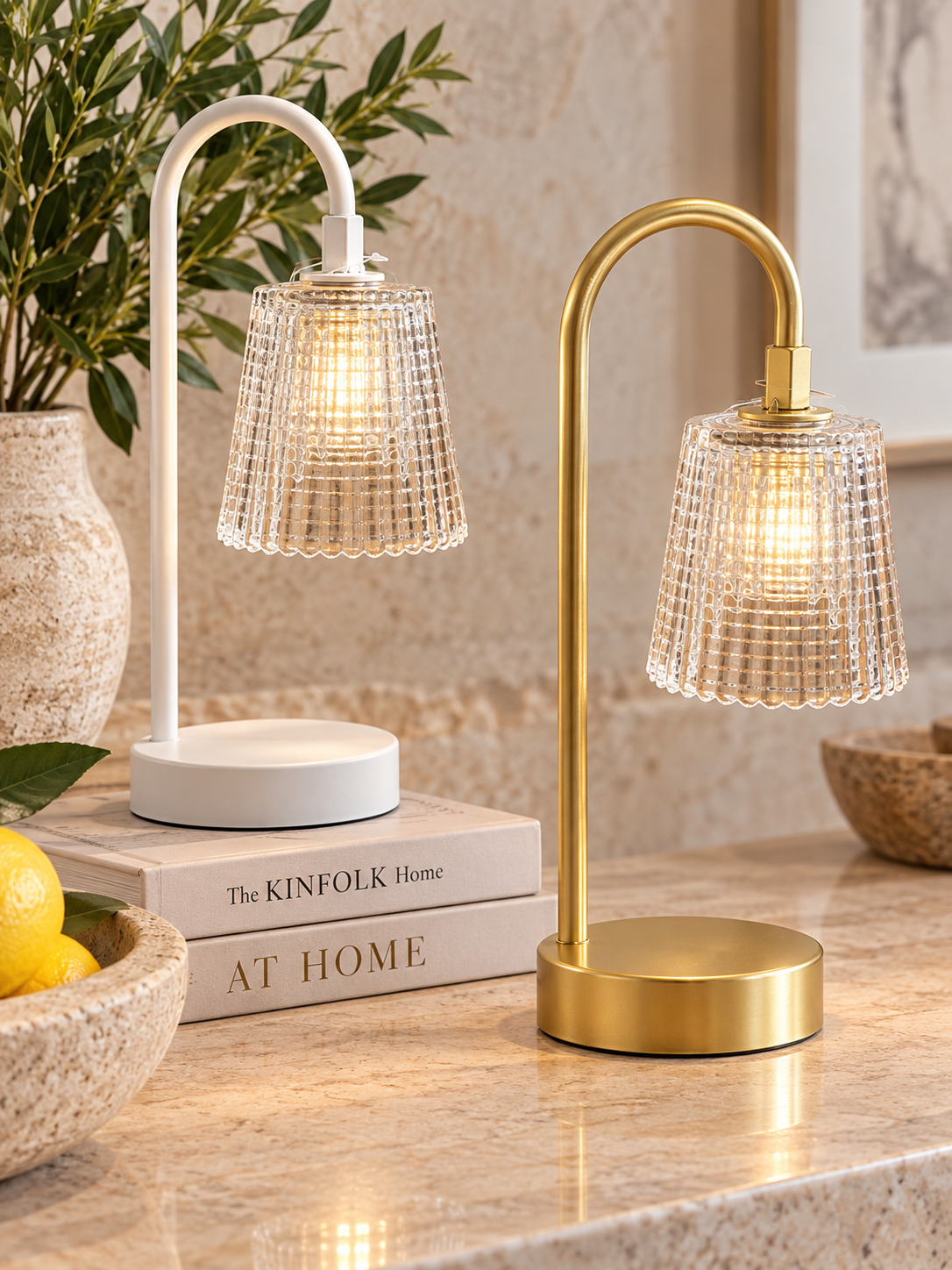
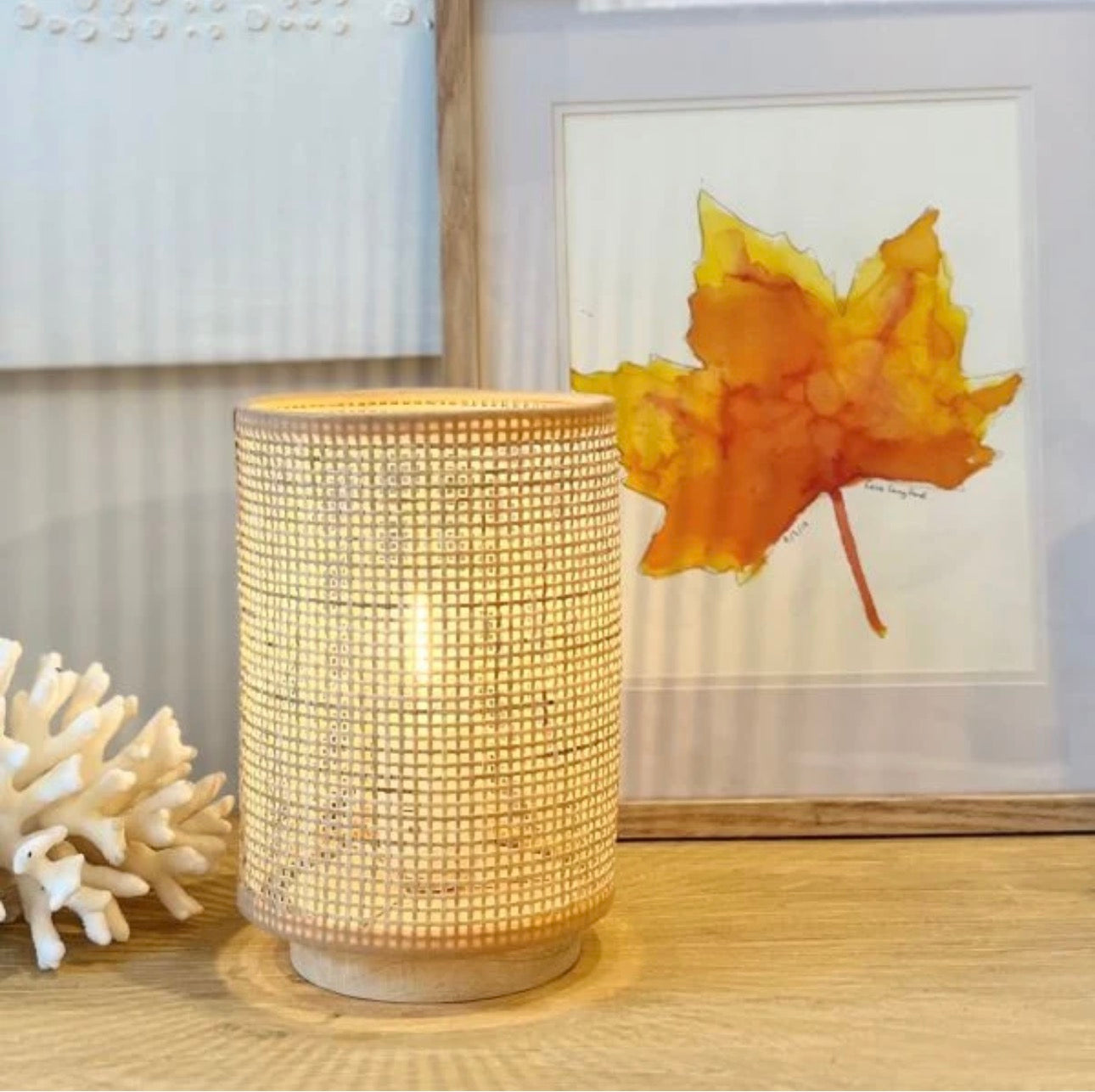
For a relaxed, coastal feel, a woven shade over a timber-look base brings warmth and texture. If you want a woven lamp option for a different bedside setup, our Weave Hurricane Lamp suits cosy reading corners and kids' rooms. For a cleaner, more elegant look, a glass lamp to picture in your own room adds a soft, textured glow without visual weight.
Choosing Your Bedside Lamp From the Collection
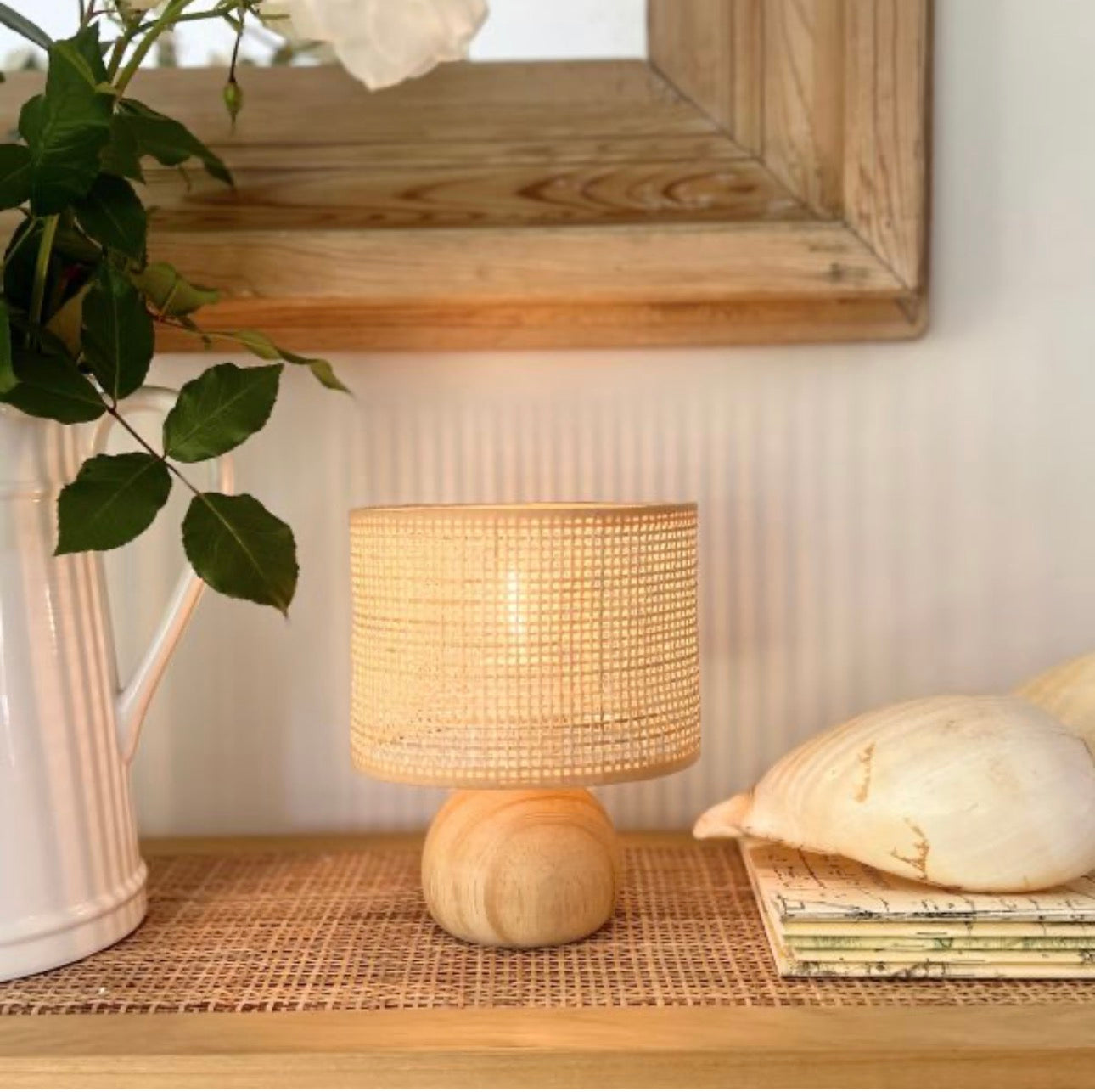
Choosing well means matching the lamp to how you actually use the bedside table. If you want a specific timeless bedside lamp you can picture in the room, our BOTL Weave Table Lamp pairs a natural timber-look base with a woven shade.
A few final rules we stand by:
- Measure the table before you buy anything
- Keep the shade top near 60 to 70 cm above the mattress
- Build the styling in three layers, never five
For broader guidance on lighting a bedroom, the Australian Government's energy advice on choosing efficient lighting is a useful reference. For styling principles that hold across rooms, see Houzz's guide to bedside table styling.
A bedside table should feel calm the moment you reach for the light. If yours still feels cluttered or the lamp never quite sits right, start with proportion and work outward.
Frequently Asked Questions
How tall should a bedside lamp be?
Aim for a total lamp height, base plus shade, of roughly 60 to 75 centimetres when measured from the top of the bedside table, or about 45 to 60 centimetres above the mattress. The shade's bottom edge should sit at or just below eye level when you are sitting up in bed, so the light falls on your book rather than into your eyes. If your table is low, a taller lamp restores the balance; if the table is high, a shorter, wider lamp keeps the arrangement grounded.
Where should a bedside lamp sit on a bedside table?
Place the lamp toward the back corner nearest the bed, leaving the front edge clear for a book, glass or phone. Keep at least 5 centimetres between the shade and the wall so heat and light are not trapped, and check that the switch is reachable while lying down. On a narrow table, a smaller lamp set slightly off-centre looks more considered than one dead centre, and it frees up room for a small dish or vase.
Should bedside lamps match on both sides of the bed?
They do not have to match exactly, but they should relate. Two lamps of the same shape in different finishes, or the same finish in slightly different silhouettes, read as intentional. What breaks the look is a mismatch in scale: a tall floor-style lamp on one side and a tiny accent lamp on the other pulls the bed visually off balance. If the tables themselves differ in height or width, match the lamp heights instead so the top line stays even.
What should you put on a bedside table with a lamp?
Keep it to three things: the lamp, a small stack of two or three books, and one object with texture such as a ceramic dish, a small vase or a candle. Anything more starts to crowd the surface and collect clutter. Choose pieces in the same warm family as the lamp, such as timber, brass, linen or stoneware, so the arrangement feels calm rather than busy. Leave a clear patch of tabletop visible; negative space is what makes a styled bedside look effortless.
