

Last Updated: November 16, 2026
Quick Summary
Safe shipping for fragile home decor means wrapping each piece individually in tissue paper and bubble wrap, then placing it in a sturdy double-wall box with 5 to 8 cm of cushioning on all six sides. Fill every gap so nothing moves, seal with three tape strips, and double-box high-value pieces.
- Use double-wall corrugated cardboard for anything over 1 kg.
- Keep 5 to 8 cm of clearance on all six sides of the box.
- Wrap in tissue first, then bubble wrap, then fill all empty space.
- Double boxing adds 5 cm or more of cushioning between inner and outer boxes.
- Shake the sealed box: any rattle means you need more fill.
Table of Contents
- Choosing the Right Box and Packaging for Fragile Items
- How to Pack Fragile Items for Shipping, Step by Step
- How to Ship Ceramics Safely: Material-by-Material Notes
- Double Boxing Fragile Items for Extra Protection
- Testing Your Pack, Reading the Label and Handling Claims
- Cost, Weight and the Unboxing Experience
- Packing Checklist Before You Send Fragile Home Decor
- Frequently Asked Questions
Choosing the Right Box and Packaging for Fragile Items
Safe shipping for fragile home decor starts with one rule: the box must be stronger than the journey.
Box size matters just as much as strength. Aim for 5 to 8 cm of packing space on every side. Too small and there is no cushioning.
Fragile home decor is any decorative object that chips, cracks or shatters under impact: ceramics, glassware, ornaments and glazed pieces. Treat every one as breakable, even when it feels solid.
- Use double-wall corrugated cardboard for anything over 1 kg
- Keep 5 to 8 cm of clearance on all six sides
- Never reuse a box that is crushed, damp or has torn corners
- Choose a box that closes flat, with no bulging
Box strength and size
Match box strength to weight. A light ornament travels fine in single-wall board. A ceramic bowl centrepiece needs double-wall, and a tall vase needs a box at least 10 cm taller than the piece itself, since narrow, top-heavy shapes tip inside a loose box.

Cushioning materials that suit each piece
Different materials suit different pieces. Bubble wrap protects glazed surfaces from scratches and knocks. Honeycomb paper wraps curved shapes without tape touching the glaze. Foam sheets and felt pads guard edges and corners. Shredded paper fills gaps, and cotton wool suits small, delicate ornaments.
For a small glass bowl, wrap it in tissue paper first, then bubble wrap, then nest it in shredded paper.
How to Pack Fragile Items for Shipping, Step by Step
Here is the packing order that works, every time. Follow it in sequence and you will prevent most shipping damage before the parcel is even sealed.
- Wrap each item individually. Use two layers: tissue paper against the surface, then bubble wrap or honeycomb paper.
- Tape the wrap closed. Loose wrap unwinds in transit. Secure every layer.
- Add corner protection. Fold foam sheets or cardboard over edges and protruding parts.
- Place the item in the box. Centre it, with clearance on all sides.
- Fill every empty space. Shredded paper, packing paper or air pillows. Nothing should move when you shake the box gently.
- Add a second cushioning layer on top. Protection works both ways.
- Seal the parcel with three strips of tape: centre seam and both edges.
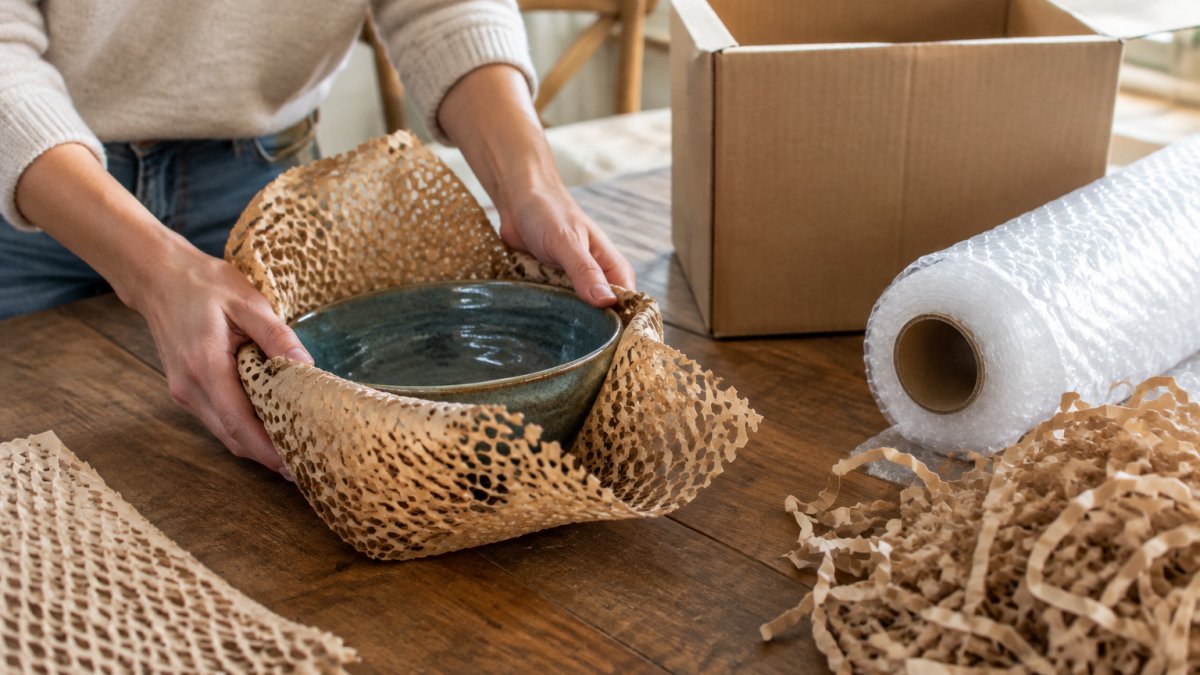
Wrap, cushion and fill in order
The order is not optional. Wrapping first stops surface scratches. Cushioning second absorbs impact. Filling last stops movement inside the box. Skip the filling step and the piece will shift with every bump.
How to Ship Ceramics Safely: Material-by-Material Notes
Fragile home decor is not one material, and a single wrapping method will not suit all of it. A glazed bowl, a framed print, a mirror and a table lamp each fail in different ways. Below are separate methods for the pieces most often sent.
Ceramics and pottery
Glazed ceramics chip at the rim, snap at handles and crack at the base under pressure. Wrap in tissue paper against the glaze, then two layers of bubble wrap with the bubbles facing inward, then double-box. Fill the base of the inner box with a firm layer of foam or folded cardboard so the weight rests on cushioning, not the box seam. A heavy bowl should sit low in the box, never perched near the lid.
- Rims and lips: add a foam strip or folded tissue collar around the rim before wrapping.
- Handles and spouts: bridge them with a cardboard saddle so the outer box takes any impact.
- Bases: a felt pad or foam sheet under the foot stops abrasion and spreads load.
Glassware and glass decor
Glass is lighter than ceramic but more brittle, and it fails suddenly. Wrap each piece separately with bubbles facing inward, and never let two glass pieces touch, even through a single layer of wrap. For stemmed glass or thin-walled vases, add a cardboard tube or rolled newspaper collar around the neck for rigidity. Small glass ornaments travel best in individual padded pockets or small boxes nested inside the main carton.
Mirrors
Mirrors are the most commonly broken decor item in transit because the reflective surface is unsupported glass. Tape an X of low-tack tape across the face to hold shards in place if it does break, then wrap the whole mirror in bubble wrap, bubbles inward. Cut two pieces of double-wall cardboard slightly larger than the mirror and sandwich it between them, taping the edges. The sandwich then goes into a box with 5 cm of cushioning on every side.
Framed art and prints
Frames fail at the corners and at the glass. Protect each corner with foam corner guards or folded cardboard, then wrap the frame in bubble wrap. For glazed frames, tape an X across the glass as for mirrors. Sandwich the wrapped frame between two sheets of rigid cardboard or foam board cut larger than the frame, and tape the sandwich closed. Ship upright where possible, and mark the outer box "THIS WAY UP".
Lamps and lighting
Lamps combine a fragile shade, a brittle bulb and a heavy base, and the base is what usually damages the shade. Remove the bulb and shade where the design allows, wrap the base separately, and pack the shade in its own box with tissue inside and out to hold its shape. If the lamp must ship assembled, fill the shade with crumpled tissue so it cannot flex, wrap the whole piece, and build a cardboard cradle around the base so the weight does not rest on the shade.
Sculptures and mixed-material pieces
Sculptures with protruding parts, arms, wings, finials, thin stems, need those parts bridged or braced, not just wrapped. Use a cardboard saddle or foam block to support the protrusion so impact is transferred to the outer box. Mixed-material pieces (ceramic on wood, glass on metal, stone on resin) need each material wrapped to its own requirement, then the whole piece double-boxed. Check joins and adhesive points: these are where mixed pieces separate under vibration.
A quick material-to-method reference
- Ceramics: tissue, bubble wrap, double-box, foam under the base
- Glassware: bubbles inward, separate every piece, collar thin necks
- Mirrors: tape an X, bubble wrap, cardboard sandwich, upright box
- Framed art: corner guards, glass X, rigid sandwich, ship upright
- Lamps: separate shade and base, fill the shade, cradle the base
- Sculptures: brace protrusions, wrap each material separately, double-box
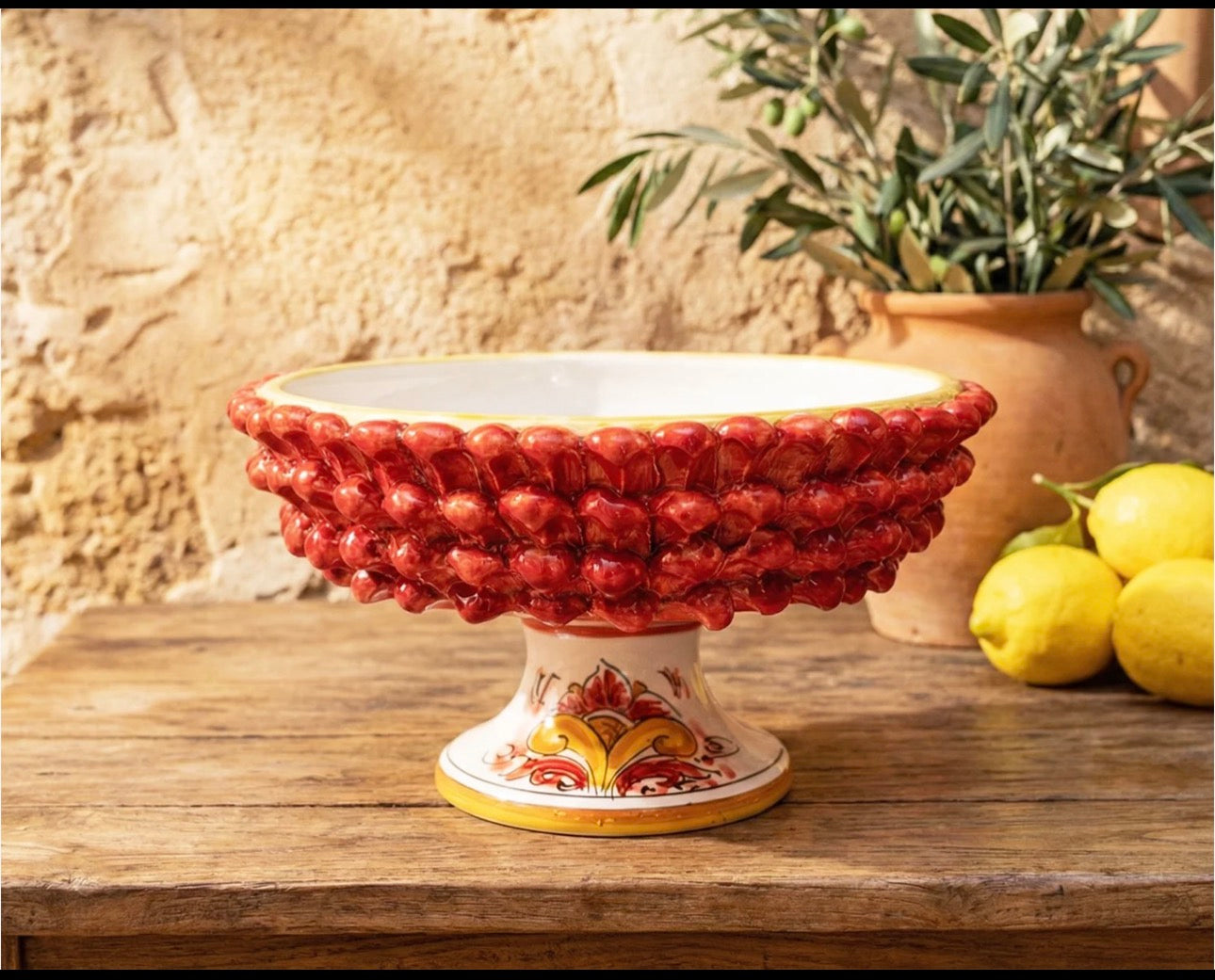
If you are packing a hand-decorated piece, look at large half pine cone stand in Sicilian ceramic from Caltagirone to see the kind of fragile, hand-finished ceramic that needs full wrapping and double boxing. Readers comparing handmade ceramics can also browse Mud Australia alternatives for ceramics that feel handmade before buying or shipping similar pieces.
Each material fails in its own way, so here is the wrapping method the article recommends for each.
| Material | Method |
|---|---|
| Ceramics | Tissue, bubble wrap, double-box, foam under the base |
| Glassware | Bubbles inward, separate every piece, collar thin necks |
| Mirrors | Tape an X, bubble wrap, cardboard sandwich, upright box |
| Framed art | Corner guards, glass X, rigid sandwich, ship upright |
| Lamps | Separate shade and base, fill the shade, cradle the base |
| Sculptures | Brace protrusions, wrap each material separately, double-box |
Double Boxing Fragile Items for Extra Protection
Double boxing fragile items means placing the packed inner box inside a larger outer box, with 5 cm or more of cushioning between them.
The inner box holds the wrapped item and its cushioning. The outer box adds a second layer of impact protection and absorbs the knocks of transit.
This matters most for pieces with handles, spouts or thin rims. Those protruding parts take the first hit, and the outer box takes it instead of the ceramic.
Testing Your Pack, Reading the Label and Handling Claims
A pack is only as good as the test you put it through before it leaves your hands. Three simple checks, shake, drop and corner, catch the majority of weak packs before they become claims. Run them on every parcel, and treat a fail as a prompt to repack.
The shake test
Seal the box, then shake it gently next to your ear. Pass: you hear nothing move and feel no shift in weight. Fail: any rattle, thud or sliding sensation means there is empty space, open the box and add fill until the contents are immobile. A pack that passes the shake test has eliminated the most common cause of transit damage: movement inside the box.
The drop test
Hold the sealed box at about knee height and drop it flat onto a hard floor, once on the base and once on a long side. Pass: the box keeps its shape, no seam splits, and the contents do not shift when you reopen and re-shake. Fail: crushed corners, split tape or a spongy feel means the box or cushioning is too weak for the weight.
The corner-impact test
Drop the box once onto a corner from the same knee height. Corners take the first hit in transit and are where protruding parts of ceramics, frames and sculptures fail. Pass: the corner dents slightly but the inner box and contents are unaffected. Fail: the corner collapses or the inner box is compressed, add corner protection or move up to double-wall board.
Reading the label
Label the parcel clearly on at least two sides. Write "FRAGILE" in block letters, and add "THIS WAY UP" with an arrow if the piece has a top. Keep labels flat and legible, and never place them over a seam or a tape line where they can peel. If you are reusing a box, remove or completely cover old labels and barcodes so the parcel is not misrouted.
Carrier rules and claims
Carrier rules and claims vary, so check the terms before you send. Photographing the item and the box before packing and again on arrival can help document any damage.
For consumer rights on damaged deliveries, see the Australian Competition and Consumer Commission.
A simple pass/fail record
Keep a short record for high-value pieces: the packed weight and dimensions, the date sent, the carrier and tracking number, and the photos taken before sealing. If a claim is needed, that record turns a difficult conversation into a straightforward one.
Cost, Weight and the Unboxing Experience
More packaging means more weight, and weight means higher postage. Balance protection against cost. Double-wall board, foam and double boxing add grams, so weigh the packed parcel before you print a label.
Choose the smallest box that still gives you 5 to 8 cm of clearance.
Then think about the unboxing. The guide to comparing eco friendly home goods helps you weigh cost and packaging choices sensibly when buying and sending sustainable pieces.
Packing Checklist Before You Send Fragile Home Decor
Run this checklist before every parcel leaves your hands. It takes two minutes and prevents most claims.
- Box is double-wall corrugated and undamaged
- 5 to 8 cm clearance on all six sides
- Each item wrapped individually in tissue and bubble wrap
- Edges, corners and handles padded
- No empty space; nothing moves when shaken
- Second cushioning layer on top
- Box sealed with three tape strips
- "FRAGILE" label on two sides
- Photos taken before sealing
- Packed weight and dimensions checked against postage cost
Packing a tall, awkward shape is one of the trickier parts of safe shipping for fragile home decor. The Sahana Vase Green is a glass vase measuring 21 x 19 x 35 cm.
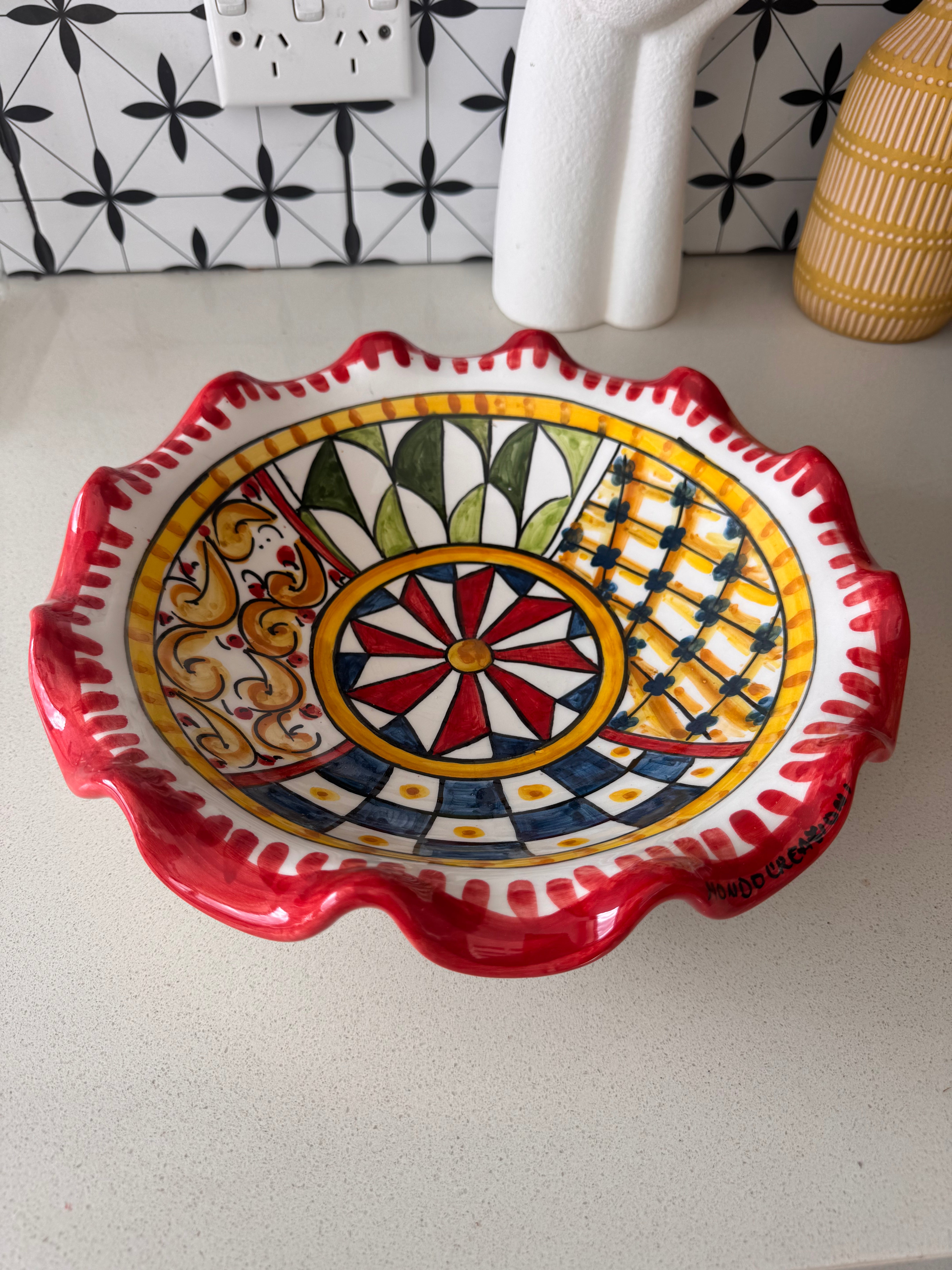
Shipping fragile pieces well is a skill, and it protects the craftsmanship you paid for. The hand-decorated Sicilian ceramic bowl centrepiece from Caltagirone is 30 cm in diameter and 8 cm high.
Frequently Asked Questions
How do you pack fragile home decor for shipping?
Choose a sturdy corrugated box slightly larger than the item, wrap each piece individually in bubble wrap or honeycomb paper, then add at least 5 cm of cushioning on every side. Fill empty spaces with shredded paper or packing paper so nothing moves, seal with tape and add a fragile label. For especially delicate pieces, double box by placing the packed inner box inside a larger one with more cushioning.
What is the best packaging for shipping ceramics and glass?
Corrugated cardboard boxes, bubble wrap, honeycomb paper, foam sheets and tissue paper cover most ceramics and glass. Wrap plates and bowls in bubble wrap with edges protected by extra foam, and wrap glass vases in tissue paper then bubble wrap. Use felt pads between stacked pieces and fill gaps with shredded paper. Avoid newspaper directly against glazed surfaces because ink can transfer.
Can you ship fragile items in their original packaging?
Original packaging helps only when it is rigid and the internal moulds still fit the piece snugly. Most retail boxes are display packaging, not shipping packaging, so add an outer corrugated box with cushioning around the original box. If the original box is flimsy or the internal supports are missing, pack the item as you would any fragile piece and keep the original box for presentation.
What should you do if fragile decor arrives damaged?
Photograph the box and the item before unpacking further, and keep all packaging materials. For higher-value pieces such as the hand-decorated Sicilian ceramic bowl centerpiece from Caltagirone at $299.00, check the seller's claims process and timing before you buy.
